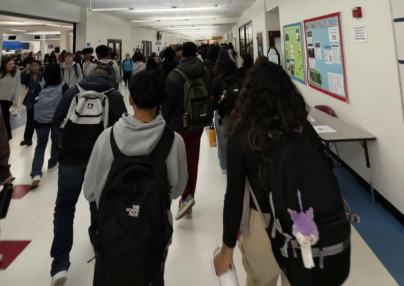
The bell rings and students pour into the hallways, but not all of them head to class. Some stop in bathrooms, wander to other parts of the building, and some disappear for the entire period.
For teachers taking attendance, those empty seats have become a familiar sight.
At Ludlowe, skipping class isn’t just an occasional problem, it’s a daily challenge affecting students, teachers, and administrators. In fact, Warner House Dean, Luigi Volpe, said he deals with this issue,“every day, multiple times a day. It’s a prominent part of our job.”
Teachers see the impact as well. Math teacher Katie Poole explained how she is, “always available, kids can always just pop in. The kids who cut class rarely are the ones that ask for the extra help.”
When asked if she had made any changes to her teaching to reduce skipping, she explained, “Yeah, no, I don’t, again, it’s not like such a big issue for me. The kids that are gonna cut are gonna cut.”
When students skip, it doesn’t just affect their own learning, it disrupts class flow and makes it harder for teachers to support everyone fairly. English teacher Karen Seltenreich said that “it is frustrating when I plan group work or a class activity and I am missing students.”
Skipping class often becomes a pattern, rather than a one time thing. Even just missing one class can lead to confusion, lower grades, or anxiety about going to the next class, which then makes skipping feel like the easier option.
As this pattern continues, students can become increasingly disconnected from their classes, making it harder for traditional attendance policies alone to break the pattern.
The Ludlowe policy states that when a student cuts a class they are not allowed to make up any assignments from that class. While this policy should help to discourage students from cutting class, along with the Saturday detention they are given, Volpe suggests that conversations with parents and counselors are a great way to support students, and hopefully prevent them from skipping.
According to the Newtown Bee, Newtown High School introduced the SmartPass system, a digital hall pass system that tracks student movement throughout the building.
Teachers create one-way passes, allowing administrators to know exactly where students are at all times.
Supporters say it makes skipping more difficult and increases accountability. Critics however, argue it can feel restrictive and doesn’t address the root problem behind why students skip in the first place.
A survey conducted at Fairfield Ludlowe High School (FLHS) revealed that around 50% of students that responded, skip one to three times per year, and around 20% skip four to 10 times a year.
Attendance policies exist to discourage skipping and promote healthy learning, but even with these policies in place, students are still skipping class.
As schools continue searching for solutions, the question remains: is stopping students from skipping enough, or does the real change require understanding why they leave in the first place?