
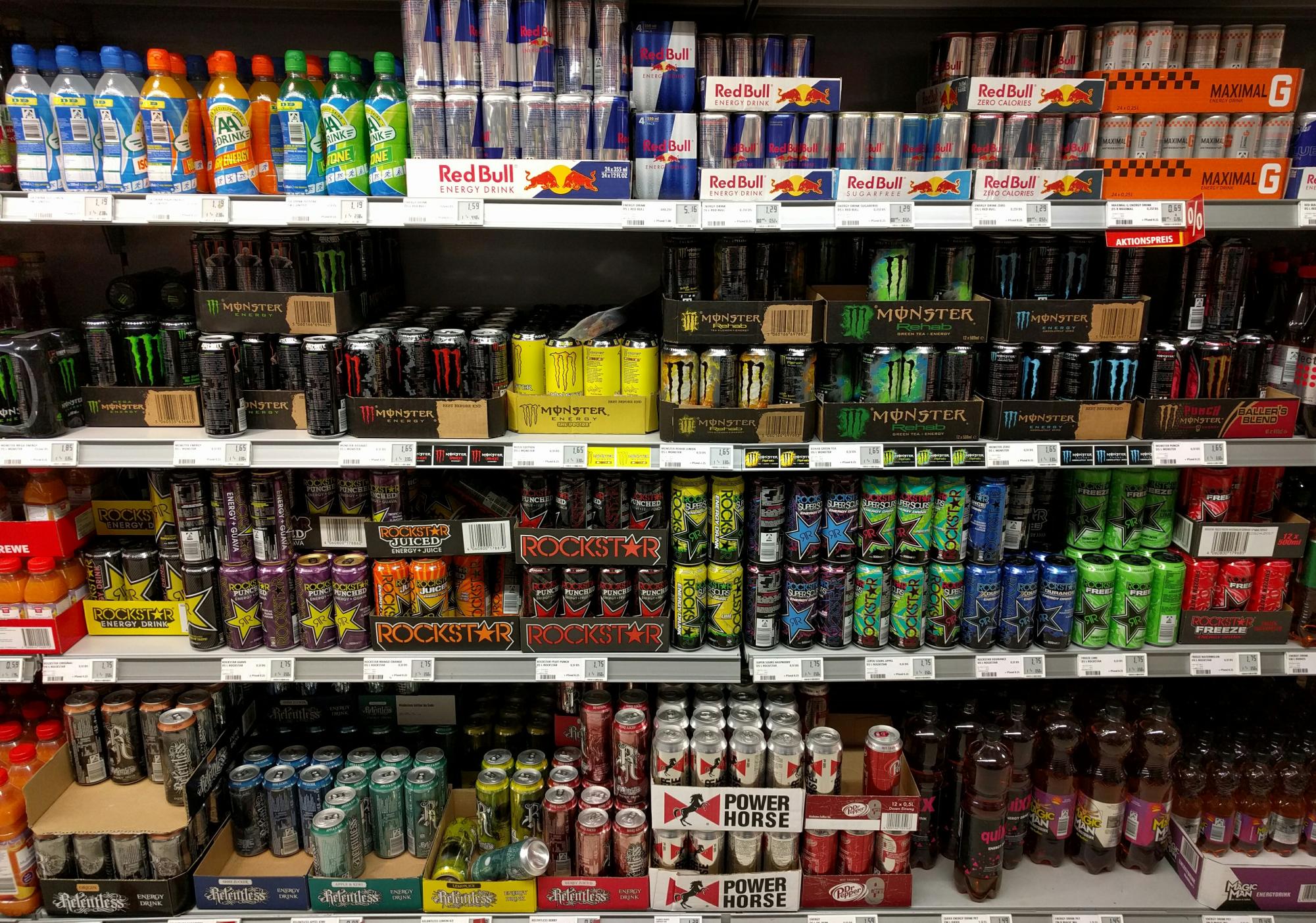
The bell rings, and students continue to scurry, half asleep, into their first period classes. Starbucks refreshers, Bloom, and Celsius cans on desks throughout, their colors glowing under the fluorescent lights of the classroom. For many students, this isn’t an occasional treat, but a necessary, daily ritual.
A 2024 poll of parents and teens conducted by the University of Michigan reports that ¼ of parents state their teen consumes caffeine almost every day or every day. Additionally, one out of three parents are unsure of the safe limits of caffeine for their teen.
While teen caffeine consumption in other forms has decreased, energy drinks have only been growing in popularity. A part of the reason for this trend is because energy drinks are often packaged and marketed towards young people.
For instance, Bloom Nutrition has built its brand on both celebrity and micro-influencer partnerships on social media that Gen Z could identify with.
The energy drink company Redbull uses extreme stunts to appeal to younger audiences, showcasing its supposed improvement to mental and physical performance.
Leah Barn, a student at Fairfield Ludlowe High School, feels that caffeine has been important for her and her peers lately, especially for schoolwork and college applications. She estimates that “when there’s a deadline, maybe 3-5 energy drinks a week.”
Although when drinking energy drinks with higher caffeine content, “[She] feel[s] a bit nauseous after,” for her, it is clear that, “it improves my academic performance.”
Energy drinks have taken over FLHS, with many students enjoying the extra energy boost to either stay up late or wake up after a restless night.
Many students believe they are a helpful tool to keep up with assignments, but according to pediatrician and Associate Professor at the University of Michigan, Susan Woolford, “Teens’ brains are still developing, and excessive caffeine consumption can affect their mood, sleep, and school performance, along with other side effects.”
While drinking caffeine may feel like an easy solution, it comes with long-term side effects. Woolford states that “They can also become dependent over time, as is true for other drugs.” Teens are more susceptible to caffeine dependency, which can occur due to regular use.
Despite the rising use of caffeine among teens, there are some who choose not to rely on it.
While caffeine consumption typically causes increased energy levels, FLHS student Mahzavin Rahman states, “it does nothing for me.” The effects she faces from caffeine are less intense compared to others when consumed at normal amounts.
Rahman doesn’t see it as a tool, but rather something that carries significant risk and drawbacks. She prioritizes time management to maintain a healthy, stable sleep schedule.
Caffeine consumption through energy drinks has been heavily promoted to teens in recent years, leading to increased popularity and usage in high schools. As this continues, greater awareness of its negative effects is essential.



![[Donald Trump] by [Gage Skidmore] is licensed under [CC BY-SA 2.0]](https://flhsprospect.com/wp-content/uploads/2026/01/silencing-the-press-1200x964.jpg)

![[Charlie Kirk] by [Gage Skidmore] is licensed under [CC BY-SA 2.0].](https://flhsprospect.com/wp-content/uploads/2025/09/charlie-kirk-article-1200x800.jpg)