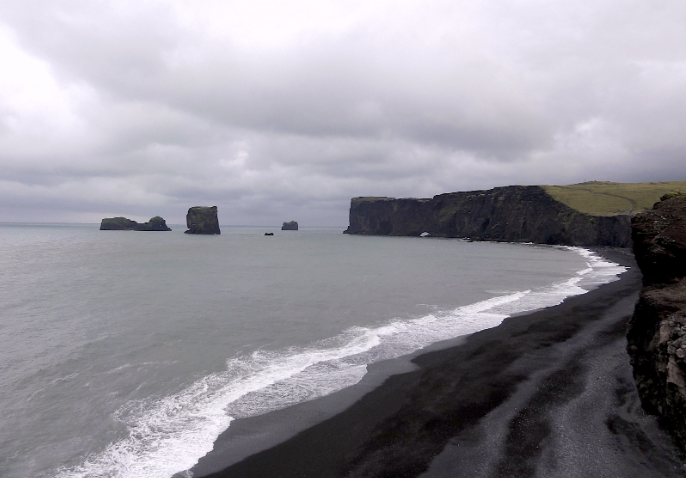
Iceland, an island country, is known for its beautiful nature, Viking history, and unique beaches. Iceland is one of the most expensive countries to travel to and in recent years it has become a huge tourist hub. Many people enjoy the countless hikes and unusual surroundings that separate Iceland from other European countries.
A famous tourist attraction in Iceland were the black sand beaches. Iceland was one of the few places in the world where you could walk on black sand until recent news where it has gone “missing”. As of early February 2026 the black sand beaches are lost in the sea. Recently, the beach has been experiencing severe winter erosion, leaving the black sand washed away and replaced by rocks. Reports in 2026 state that powerful, sustained winter storms and strong winds washed the sand into the sea, exposing the rocky underlayer and making areas previously accessible to tourists inaccessible. In addition, the black sand beaches began to lose their supply of black sand as it began to expose the shoreline. Furthermore, a portion of the slope beneath the Reynisfall Mountain collapsed trapping the black sand beneath. In addition, the actions of nature are unpredictable as climate change has begun to cause deadly erosions that cause significant damage to the beaches.
Although this may seem insignificant, the black sand beaches were crucial to Iceland. They served not only as tourist attractions, but as geographical wonders, and natural highlights. They were formed by volcanic activity where lava cools instantly upon hitting the ocean, symbolizing the island’s distinctive landscape and geological history.
The disappearance of the black sand beaches has also affected some of the wildlife. What was once a peaceful and proper ecosystem where different species of birds such as the Arctic Terns could nest is now no more. Scientists are now worried that this change could wipe out populations or at least cause a major disruption in the ecosystem. Although more recent news has suggested that the sea is bringing more black sand back, the constant erosion and severe weather Iceland is facing is causing the black sand to be lost at sea again.
While no one can predict the future and what life may throw at us, it is safe to say the return of the black sand beach is fading. Although there is some hope of the eventual return, no one can say this for certain . The black sand beaches are a clear example of the destruction that can be caused by climate change. Where tourists used to play and stand on, has faded away and may have become a distinct memory. It leaves the question: What is the future of Iceland?