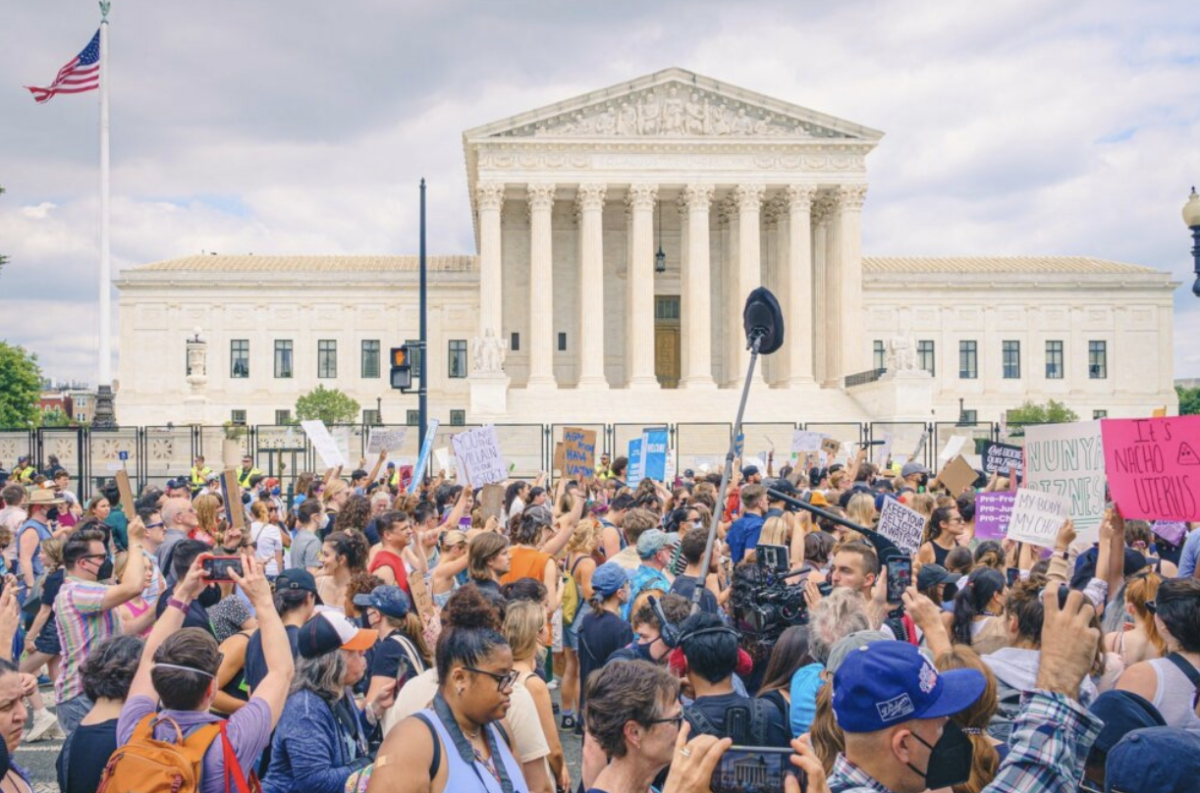
The Supreme Court is taking up one of the most consequential and controversial cases in recent years: President Donald Trump’s executive order to end birthright citizenship. This declares that children born to mothers who are in the United States illegally or temporarily are not American citizens. The executive order was signed on Jan. 20, 2025, his first day in office as part of his administration’s immigration crackdown. Having been consistently struck down and enjoined by lower courts, the order’s constitutionality is now before the Supreme Court.
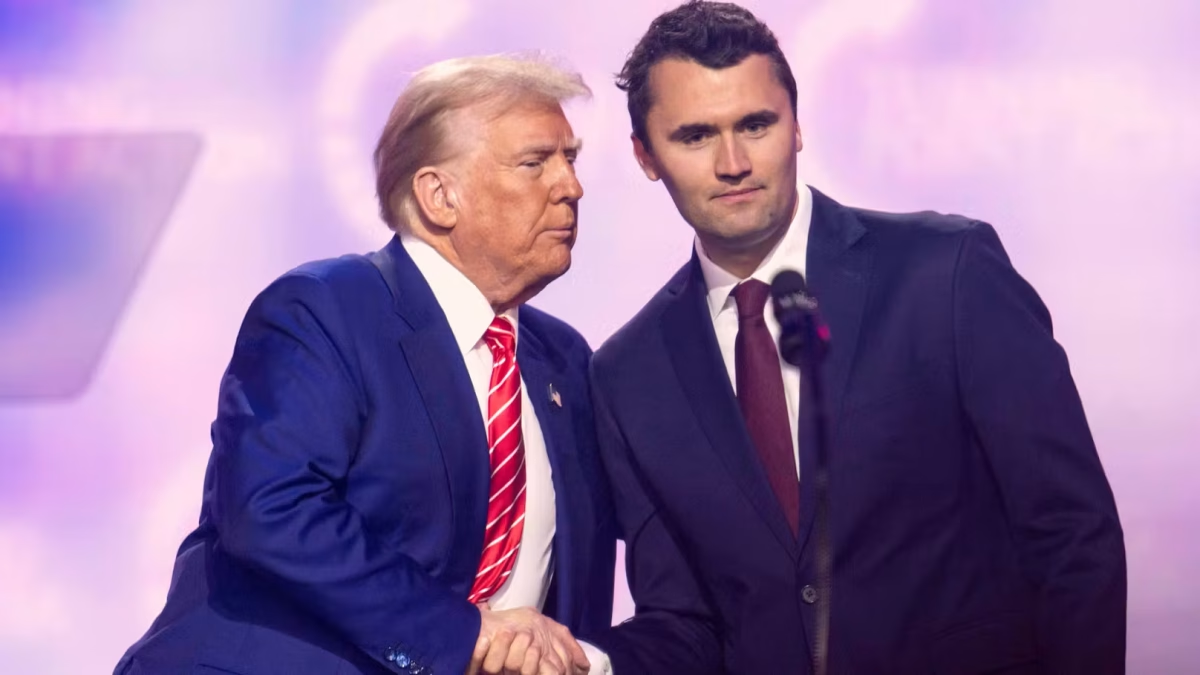
President Trump arrived at the Supreme Court on Wednesday, April 1, marking the first time a sitting president has personally attended oral arguments.. He was joined by his legal counsel, Solicitor General D. John Sauer, who has risen in the president’s esteem after securing historic victories on issues such as presidential immunity and limiting the power of judges.
The Defense
This case presents the biggest challenge yet for Sauer and the administration as a whole. Sauer and the defense team are arguing that people in the country illegally or temporarily are not “subject to the jurisdiction” of the United States, and therefore their U.S.-born children are not entitled to citizenship. They are specifically targeting the Court’s interpretation of the 14th Amendment, which says that “born or naturalized in the United States and subject to the jurisdiction thereof, are citizens of the United States.”
Steve Vladeck, a law professor at Georgetown University Law Center, noted the immense legal hurdle facing the defense in a recent interview with CNN. “Sauer has to persuade the justices not only that they’ve been wrong for more than 125 years,” Vladeck explained, “but that Congress didn’t do what it clearly did twice.” By challenging over a century of precedent and the explicit legislative intent of Congress, Sauer is essentially asking the Court to rewrite established history. As Vladeck puts it, “That’s quite an uphill climb even before we get to the implications.”
The Defense’s arguments were met with bipartisan criticism from the bench.. Chief Justice Roberts, a generally considered moderate conservative, told Sauer “You obviously put a lot of weight on ‘subject to the jurisdiction thereof,’ but the examples you give to support that strike me as very quirky.”
The Implications
The battle over the meaning of birthright citizenship is one of the most consequential legal disputes in recent years. According to National Public Radio (NPR), an estimated 300,000 babies were born to parents without legal status in the United States in 2023. Without birthright citizenship, the parents of the approximately 3.6 million babies born in the United States each year would likely need to verify their citizenship through an administrative framework that does not currently exist.
A birth certificate would no longer serve as sufficient proof of citizenship on its own. Beyond new births, such a shift could create legal uncertainty regarding the status of tens of millions of American citizens born since the ratification of the 14th Amendment. This would force individuals to provide secondary evidence of their parents’ legal status at the time of their birth— records that, in many cases, may no longer exist. Though the judge’s skepticism over the oral arguments points to a rejection of the order, a formal decision is not expected until June of this year.